One Pair, Every Court: The Athletes Refusing to Let One Sport Own Their Kicks
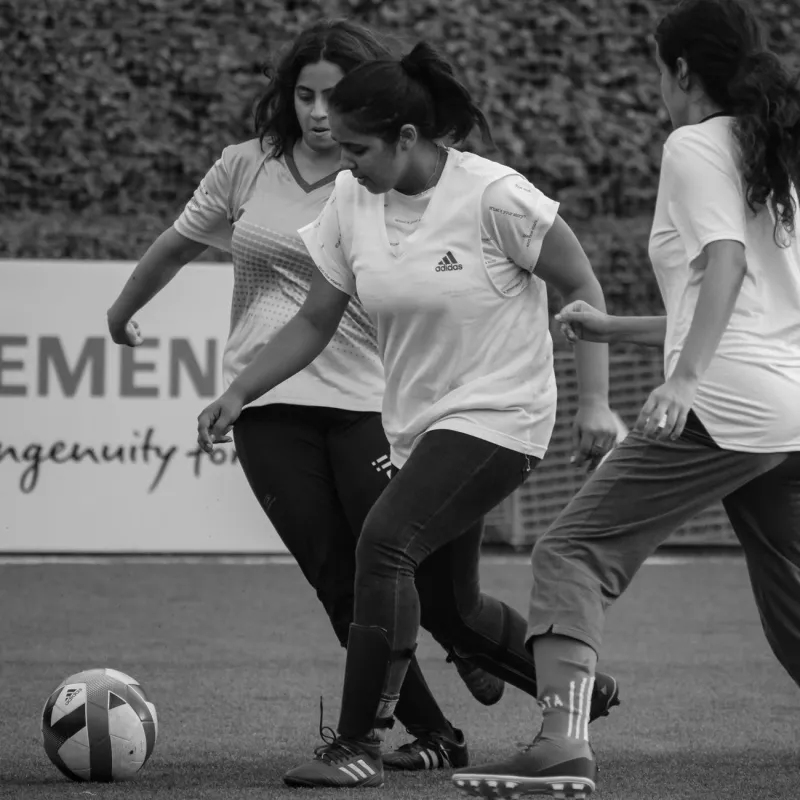
Saturday morning for Darius Cole looks like this: pickup basketball at 7 AM, a five-mile run at 10, and a recreational soccer league game at 2 PM. He lives in Houston, works in logistics during the week, and squeezes every sport he loves into 48 hours. He does most of it in the same pair of Adidas.
"People look at me like I'm crazy," he says. "But I've tested it. The shoes work. Why am I carrying three different bags?"
Darius isn't an anomaly. Across the country, a growing wave of athletes — weekend warriors, multi-sport competitors, fitness-obsessed everyday people — are pushing back against the idea that every sport demands its own dedicated footwear. And Adidas, whether by design or by fortunate circumstance, keeps ending up on their feet.
The Rise of the Cross-Discipline Athlete
American fitness culture has shifted dramatically over the past decade. The era of the single-sport recreational athlete — the guy who plays in a Tuesday night basketball league and nothing else — is giving way to something more fluid. CrossFit, Hyrox, obstacle races, recreational sports leagues, and gym culture have produced a new kind of mover: someone who might lift in the morning, run at lunch, and play a sport in the evening, often several times a week.
The fitness industry has largely responded by creating more specialized products — trail runners, lifting shoes, court shoes, turf cleats. The segmentation is real and, in elite performance contexts, genuinely matters. But for the millions of Americans exercising recreationally across multiple disciplines, hyper-specialization creates a practical headache. And it's an expensive one.
Enter the multi-sport silhouette — not officially branded as such, but increasingly functioning that way.
Why Adidas Keeps Showing Up
Ask multi-sport athletes what they're wearing and Adidas names come up with striking regularity. The Ultraboost, the Adizero, the Dropset trainer, the Predator in its various forms — these shoes are showing up in contexts their original design briefs never anticipated.
Take the Adidas Dropset 2. It was built as a training shoe, designed for the lateral demands of weight training with a wide, stable base. But athletes have been wearing it for HIIT classes, recreational volleyball, and even light trail running. The outsole grip and midfoot lockdown translate surprisingly well across surfaces.
Jordan Espinoza, a 28-year-old personal trainer in Denver, started wearing the Dropset 2 for client sessions and found herself running errands, hiking short trails, and playing in a weekend volleyball league in the same shoe. "I just never took them off," she says. "I kept waiting for them to fail me in some context and they never really did."
That's not accidental. Adidas has increasingly built its training category around what the brand describes as "multi-directional stability" — construction principles that prioritize support across movement planes rather than optimizing for a single athletic motion. It's an engineering philosophy that, whether intentionally or not, creates shoes that translate.
Real Athletes, Real Repurposing
The stories get creative. Marcus Tran, a 31-year-old in Seattle, plays recreational soccer on Sundays and runs a half-marathon training program during the week. He's been doing both in Adidas Copa shoes — technically a soccer training shoe — because the firm upper and flat outsole give him the ground feel he prefers for road running. "I know it's not what they're designed for," he says. "But I've run a 1:47 half in them. They work for me."
Then there's Aaliyah Brooks, a high school track coach in Atlanta who also plays in a women's basketball league. She wears the Adidas 4D Fusion for both. "The 4D midsole gives me enough cushion for the court and enough responsiveness on the track. I'm not an elite athlete. I just need a shoe that keeps up with my life."
These aren't edge cases. They're a behavioral pattern that's showing up in how people actually shop and wear athletic footwear — and it's one that brands are starting to pay attention to.
What This Means for Product Development
The sneaker industry has long operated on a segmentation model: one shoe for one sport, engineered to peak performance specs for that specific context. That model made sense when most consumers played one sport seriously. It makes less sense for the modern recreational athlete who is, by definition, a generalist.
Adidas has been quietly experimenting with how to serve this audience. The brand's training category has expanded significantly, and the language around products like the Adizero line has shifted to emphasize adaptability alongside speed. Whether this is a deliberate pivot toward the multi-sport consumer or simply a byproduct of building versatile technology is hard to say definitively — but the effect is the same.
What's more telling is the marketing. Adidas has increasingly featured athletes in campaign content who are defined not by a single sport but by an active lifestyle — someone who runs, lifts, plays pickup, and moves through the world with physical energy. That's a different image than sponsoring a soccer star or a track champion. It's speaking directly to the Dariuses and Aaliyahs of the world.
The Bigger Shift
There's something culturally significant happening here beyond the practical question of which shoe to wear to the gym. The multi-sport athlete represents a rejection of over-specialization — a push back against the idea that you have to choose a lane and stay in it. That ethos maps onto a broader generational attitude about identity, career, creativity, and self-definition.
You don't have to be just one thing. Your shoes don't have to be, either.
Adidas, with its roots in both elite performance and street culture, occupies a rare position in the market: a brand that athletes trust for serious sport and that culture embraces for everyday life. The multi-sport movement is, in a way, the natural conclusion of that duality. When one pair of kicks can carry you from the weight room to the blacktop to the pitch and back again, the journey itself becomes the point.