Road Trip, Three Stripes Deep: How Adidas Fans Are Drawing Their Own Map Across America

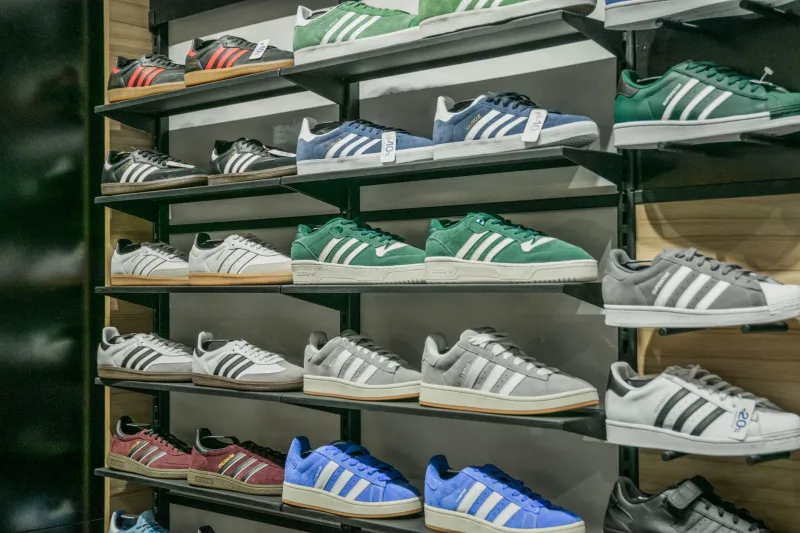
There's a moment Marcus Webb describes that most sneakerheads will recognize immediately. He's standing outside a small shop in Atlanta's West End neighborhood, holding a pair of Forum Lows he just pulled off the shelf, and he says the feeling hit different than any online checkout confirmation he'd ever gotten. "It wasn't about the shoe," he says. "It was about where I was standing when I got it."
Marcus, a 31-year-old graphic designer from Columbus, Ohio, spent three weeks last summer driving a loop through the South and Midwest with nothing but a Notes app full of addresses, a cooler in the backseat, and a loose plan to connect dots between sneaker culture landmarks he'd been cataloging for years. He wasn't chasing a specific release. He was chasing something harder to name — a feeling that the culture he grew up loving existed in physical space, not just on a screen.
He's not alone. Across the country, a growing wave of Adidas enthusiasts are trading refresh buttons for road maps and building deeply personal itineraries that thread together sneaker history, community art, independent retail, and lived experience into something closer to a pilgrimage than a shopping trip.
The Route Is the Point
These aren't organized tours. There's no official stamp book, no Adidas-sanctioned trail guide. The routes are handbuilt, passed between friends in DMs, shared in Discord servers, or quietly documented on personal blogs. What they share is an impulse to treat the American landscape as a living archive of Three Stripes culture — one that exists far beyond flagship stores and mall kiosks.
Denver-based collector Yolanda Reyes has been building her route for two years. Her map includes a stop at a community mural in Chicago's Bronzeville neighborhood that features a wall-sized Superstar alongside portraits of local athletes from the '80s. Another pin marks a Black-owned boutique in Houston that stocks rare Adidas runners alongside zines about sneaker history. A third lands on a community basketball court in Harlem where the asphalt itself feels like a chapter in the story of Adidas in America.
"I started keeping notes after I visited this tiny shop in Memphis," Yolanda explains. "The owner had been in business for over twenty years. He had framed photos on the wall, stories about what certain shoes meant to the neighborhood at specific moments. I left knowing more about Adidas than I'd ever learned online."
Her route now spans eleven states and counting. She's nowhere close to done.
Hidden Gems and the People Who Guard Them
What these travelers are finding off the beaten path is often more compelling than what any glossy editorial serves up. Small, independent sneaker boutiques — many of them Black-owned, Latino-owned, or family-run — function as community memory banks. They stock the shoes, sure, but they also hold the context.
In New Orleans, a shop tucked behind a barbershop on Magazine Street has been quietly stocking Adidas Originals since the early 2000s. The owner, a man everyone calls Coach, can tell you exactly when the Stan Smith went from tennis court to neighborhood staple in that city, and why it mattered. In Philadelphia, a consignment spot in West Philly doubles as an informal gallery, with framed vintage Adidas advertisements lining the walls between racks of deadstock and gently worn pairs.
These spots don't run ads. They survive on reputation and repeat customers. For travelers coming through with fresh eyes, they're revelations.
"The best finds on my whole trip weren't shoes," says Darius Fontaine, a 27-year-old from Detroit who drove the East Coast corridor last fall. "They were conversations. People who remembered things, who had opinions, who connected the shoes to something real — music, sports, a specific summer, a specific block."
Street Art and the Visual Language of the Culture
Beyond retail, the routes these collectors are building often run straight through neighborhoods where Adidas iconography has been absorbed into the visual fabric of the street. Murals featuring the three stripes, the Trefoil, or recognizable silhouettes of classic models appear in cities from Baltimore to Los Angeles — not as brand advertising, but as cultural shorthand. A symbol that means something to the people who live there.
In the Crenshaw district of Los Angeles, a mural honoring local athletes incorporates Adidas shell toes in a way that feels as natural as a flag. In Brooklyn, a years-old piece in Bushwick's outdoor gallery features a stacked composition of Adidas boxes that's been photographed thousands of times but never formally documented as part of any sneaker culture archive.
Collectors doing these trips are starting to change that. Some are photographing and geotagging what they find. Others are writing it up in newsletters or posting informal guides for the next person coming through. A loose, decentralized archive is slowly taking shape.
What It Means to Actually Live the Culture
There's a version of sneaker culture that's entirely transactional — cop, hold, flip, repeat. These road trippers are operating from a different philosophy. For them, the culture is something you move through, not just something you accumulate. The shoes are entry points, not endpoints.
"I've got pairs in my collection that I barely think about," Marcus admits. "But I think about that Atlanta shop all the time. I think about the guy behind the counter who told me about growing up watching Run-DMC and what that meant for how he understood Adidas. That's what stuck."
Yolanda puts it even more plainly. "The route teaches you things the internet can't. You start to see how Adidas shows up differently depending on where you are — what it means in Houston versus what it means in Detroit versus what it means in Harlem. It's the same brand, but the relationship is different everywhere. That's what makes it worth the drive."
For anyone thinking about plotting their own version, the advice from the people doing it is consistent: start with one city you don't know well, find one independent shop that's been around for at least a decade, and ask questions. The map grows from there.
The road is open. The culture is out there. You just have to go find it.