Street Scholars: The Self-Taught Adidas Experts Who Became the Industry's Secret Weapon

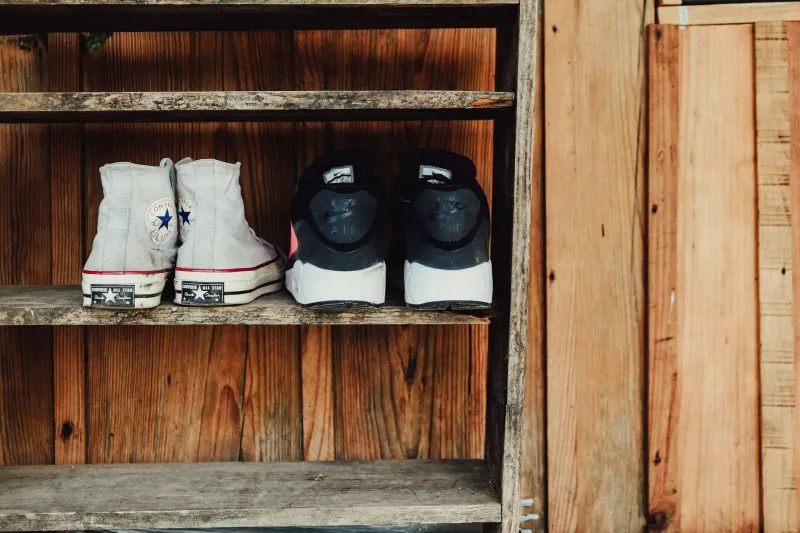
Photo by Photo by Chiara Guercio on Unsplash on Unsplash
There's no accredited university program for this. No degree hanging on the wall, no thesis committee, no graduation ceremony. But make no mistake — the depth of knowledge some collectors have built around Adidas silhouettes, materials, and manufacturing history is genuinely doctoral-level. And the industry is starting to catch on.
Over the past several years, a quiet shift has been happening behind the scenes in sneaker retail, brand consulting, and even auction houses. The people being brought in to authenticate rare pairs, advise on heritage reissues, or help brands understand what actually resonates with core communities? They're not always coming from traditional fashion backgrounds. Sometimes they're the guy who's been running an Instagram archive account since 2014, or the woman who's cataloged every variation of the Samba sole unit across four decades of production.
When Obsession Becomes a Résumé
Take Marcus Webb, a 34-year-old from Atlanta who started collecting Adidas Originals in high school after inheriting a beat-up pair of Campus shoes from his older brother. What began as casual curiosity turned into a decade-long deep dive into production runs, regional exclusives, and the subtle manufacturing differences between pairs made in Yugoslavia versus Taiwan versus Indonesia.
"I wasn't trying to become an expert," Webb says. "I was just trying to understand what I was buying. Then I realized most people — even people selling the shoes — didn't know half of what I knew."
That knowledge eventually caught the attention of a regional boutique chain looking to build out its vintage and deadstock buying program. They brought Webb in as a part-time consultant. Now he advises on acquisitions, helps staff understand provenance, and occasionally gets called when something suspicious needs authenticating.
His story isn't unique. Across the country, collectors who've spent years building encyclopedic knowledge of Adidas history are finding that expertise has real-world value — even if nobody gave them a certificate for it.
The Curriculum Nobody Assigned
What does it actually take to reach this level? The collectors who've crossed into consulting territory tend to describe a similar self-directed education. It usually starts with personal collection, expands into community forums and Facebook groups, deepens through hands-on handling of hundreds or thousands of pairs, and gets refined through relationships with other serious collectors who push back on assumptions.
The Adidas archive is particularly rich territory for this kind of study. The brand's history spans nearly eight decades, multiple ownership eras, dozens of manufacturing countries, and a catalog of silhouettes so vast that even longtime employees admit they don't know all of it. The Superstar alone has spawned enough colorway and construction variations to fill a textbook. The Stan Smith's production history reads like an archaeology dig — different materials, different heel tabs, different tongue constructions depending on the year and market.
Sneaker historian and content creator Priya Nair, based in Chicago, has spent the better part of six years documenting Adidas running silhouettes from the late '70s and '80s — a niche so specific that she sometimes goes weeks without finding another person who cares about it as much as she does. That changed when a major sportswear retailer reached out about helping them build educational content around a heritage running reissue campaign.
"They wanted to make sure the story they were telling was accurate," Nair explains. "They'd done internal research but kept hitting walls. Someone sent them my archive and they just called me."
Blurring the Lines Between Fan and Authority
This is where it gets interesting — and a little complicated. The line between passionate enthusiast and legitimate authority is genuinely blurry in sneaker culture, and that creates both opportunity and tension.
On one hand, collectors like Webb and Nair bring something institutional knowledge often can't: years of hands-on experience, community trust, and an understanding of what details actually matter to the people who care most about the product. They've held the shoes, compared them side by side, argued about them in comment sections and Discord servers. That's not nothing — in many ways, it's everything.
On the other hand, the sneaker world has its share of self-proclaimed experts whose authority hasn't been seriously tested. The same passion that drives genuine scholarship can also produce confident misinformation, especially when financial incentives enter the picture. A consultant who's wrong about a pair's authenticity can cost a buyer real money.
Authentication platforms have tried to address this by building more systematic verification processes, but many insiders will tell you that the best authenticators are still the obsessives who can't stop thinking about the shoes — not the ones who learned a checklist.
What the Brands Actually Want
Brands themselves have a complicated relationship with this class of unofficial experts. There's genuine value in tapping people who understand the community from the inside. When Adidas has leaned into heritage storytelling — with reissues, archive drops, or campaigns built around specific silhouettes — the most resonant executions have often involved people who actually lived those cultural moments or studied them deeply.
At the same time, brands can be protective of their own narratives. Bringing in outside voices means accepting that the official story might get complicated, corrected, or challenged. The collector who knows that a celebrated "original" colorway was actually a regional variation introduced three years after the silhouette's debut isn't always a comfortable presence in a marketing meeting.
But the brands that have leaned into this tension — treating deep collectors as genuine collaborators rather than just validators — tend to produce the work that hits hardest with the community.
The Next Generation of Street Scholars
Younger collectors are coming up in a different environment than their predecessors. Information is more accessible, but so is misinformation. The forums that once served as rigorous peer-review communities have partly given way to social media, where virality doesn't always track with accuracy.
Still, the fundamentals haven't changed. The collectors who'll matter in ten years are the ones putting in the reps now — handling shoes, building relationships with other serious people, and developing the kind of nuanced judgment that only comes from being wrong a few times and learning from it.
The sneaker doctorate doesn't come with a diploma. But for the people who've earned it, the credential is real — and the industry is slowly figuring out how much it's worth.