Every Pair Tells a Story: What Your Adidas Collection Reveals About Who You've Become
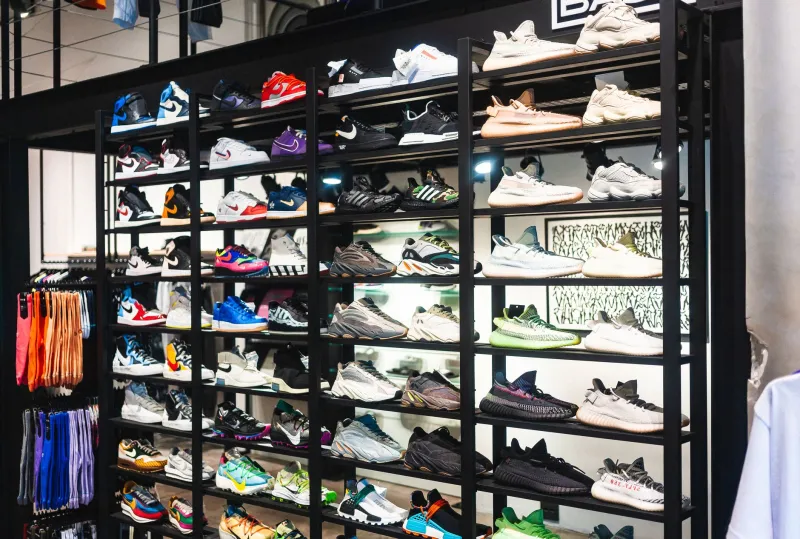
Walk into Marcus Webb's apartment in Atlanta and the first thing you notice isn't the furniture or the art on the walls. It's the shoes. Two full walls of shelving, lit from underneath, holding somewhere around 140 pairs of Adidas. He knows the story behind every single one.
"That pair right there," he says, pointing to a worn set of Stan Smiths with a cracked sole, "those were the first shoes I bought with money I earned myself. I was 17, working at a grocery store. I didn't even wear them for a week because I was scared to mess them up."
Marcus isn't unusual. Talk to serious sneaker collectors long enough and you start to realize that what looks like a hobby is actually something closer to autobiography. The shoes aren't just objects — they're anchors to specific moments, relationships, and versions of yourself that you might not be able to describe in words but can absolutely point to on a shelf.
The Shoe as a Time Capsule
There's a reason people hold onto sneakers long after they've stopped wearing them. Psychologists who study material culture — the relationship between people and their possessions — have long noted that certain objects become what they call "self-extension." They carry identity. They hold memory in a way that a photograph can't quite replicate, because you didn't just look at them, you lived in them.
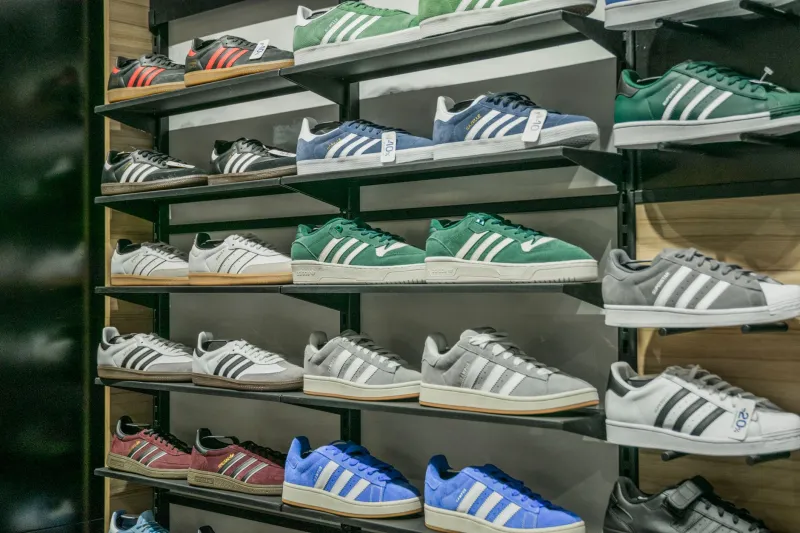
For a lot of Americans who grew up in sneaker culture, Adidas has been a constant thread running through those moments. The brand's range is wide enough — from the stripped-down elegance of the Samba to the tech-forward bulk of the Ultraboost to the street-born legacy of the Forum — that different models tend to map onto different phases of life almost naturally.
Denise Okafor, a 34-year-old product designer in Brooklyn, puts it plainly: "Every time something major happened in my life, I ended up buying a new pair. I don't think I planned it that way. But when I look back at photos from different years, I can always tell where I was emotionally by what was on my feet."
Her collection includes a pair of Adidas Gazelles she wore through a difficult breakup, a set of NMDs she bought the week she landed her first real design job, and a pair of Yeezys she picked up during what she describes as her "trying too hard" era — a phase she now laughs about but doesn't disown.
"Those Yeezys are staying," she says. "I need to remember that version of me. She was figuring it out."
First Paychecks and Proving Ground Pairs
Across the country, one theme comes up again and again when collectors talk about their earliest Adidas purchases: the first-paycheck shoe. It's almost a rite of passage in American sneaker culture — the moment when you stop asking a parent for shoes and start choosing for yourself with money you earned.
For a lot of people, that choice lands on Adidas. The brand's price range makes it accessible without feeling like a compromise, and the cultural credibility is baked in. You're not just buying a shoe — you're buying into a lineage.
Jordan Reyes, a 28-year-old teacher in Chicago, remembers his first-paycheck pair vividly: white Adidas Superstars with gold trim, bought after his first summer of working construction with his uncle.
"I wore those things everywhere. Church, school, dates. They were beat up within a month because I refused to rotate them. But I wore them that hard on purpose. I wanted everyone to know I had a pair."
He still has them, boxed in his closet. He's never going to wear them again. That's not the point.
Relationship Shoes and the Pairs You Can't Give Away
Some sneakers are tied not to solo milestones but to other people. The pair you were wearing when you met someone. The shoes that showed up in a photo from a trip you took with your best friend. The matching sets you and a partner bought during a phase when you were finishing each other's sentences.
These are often the hardest shoes to get rid of — and the most complicated to keep.
Tamika Lawson, a 31-year-old nurse in Houston, has a pair of Adidas Originals she and her ex-boyfriend bought together at a pop-up in 2019. The relationship ended. The shoes stayed.
"For a long time I couldn't look at them," she admits. "But I also couldn't throw them away. They were a part of something real. Now when I see them, I don't feel sad — I feel like, okay, that was a whole chapter. I was that person. I loved that hard. And then I moved on."
That phrase — moved on — echoes through almost every conversation about sneaker collections and personal history. The shoes don't just mark where you were. They mark the transition. The moment you laced up and kept going.
Career Pivots and the Shoes That Came With Them
It's not just relationships that get memorialized in rubber and leather. Career changes, relocations, and personal reinventions tend to show up in collections too.
Derek Hsu, a 37-year-old who left a finance job in New York to open a coffee shop in Portland, Oregon, marks the shift clearly in his collection. Pre-transition: a lot of clean, minimal Adidas — Stan Smiths, Copa shoes, things that worked in boardrooms. Post-transition: Sambas in earthy tones, Forums in worn colorways, shoes that felt more lived-in and less curated.
"My collection got messier when my life got more honest," he says. "I stopped buying shoes to signal something to other people and started buying them because I actually wanted to wear them. That felt like growth."
It's a subtle shift, but collectors who've been at it long enough recognize it immediately. There's a version of sneaker collecting that's about performance — about showing other people who you are. And then there's a version that's purely personal, where the audience is just you.
Moving Forward, One Pair at a Time
What ties all of these stories together isn't brand loyalty or resale value or heat rankings. It's the idea that moving forward — really moving forward — means carrying your history with you without being trapped by it.
The shoes on Marcus Webb's wall aren't a museum. They're a map. Each pair is a coordinate on a journey that's still happening. He's still adding to the collection, still marking moments, still letting the shoes tell the story his words sometimes can't.
"People ask me why I don't sell them," he says, scanning the shelves. "I'm like — sell what? These aren't just shoes. This is my whole life up here."
That's the thing about a real collection. It's never really finished. There's always another chapter, another pair, another version of yourself that hasn't laced up yet.
Keep moving.