Less Is More: Why the Sharpest Sneaker Collectors Are Letting Go of Their Adidas
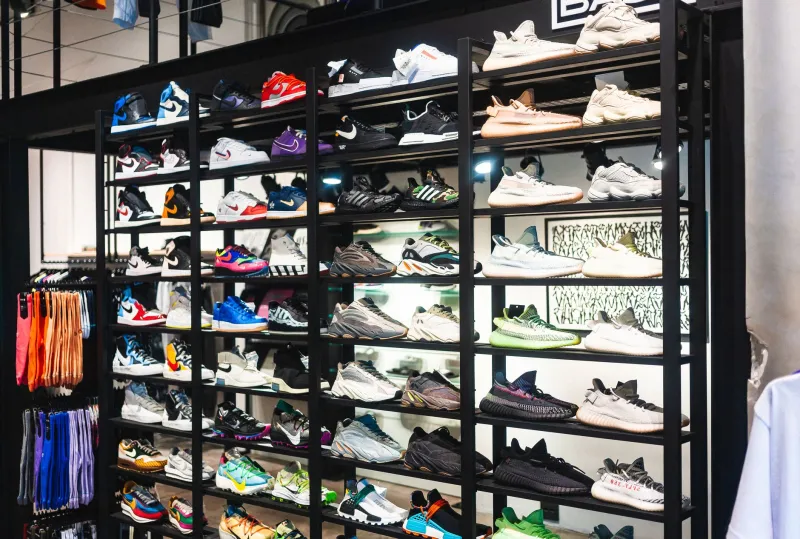
Walk into Marcus Webb's apartment in Atlanta and the first thing you notice is the wall. Not the art, not the furniture — the wall of sneakers. Or rather, what's left of it. A year ago, it held 140 pairs. Today, it's down to 38. And Webb, a 31-year-old graphic designer who's been collecting Adidas for over a decade, couldn't be more at peace with that number.
"I used to think the collection was the flex," he says, leaning back in his chair. "Now I realize the edit is the flex."
Webb isn't alone. Across the country, a wave of seasoned sneaker collectors is doing something that would've seemed unthinkable five years ago: deliberately downsizing. They're liquidating doubles, releasing deadstock they swore they'd never part with, and rethinking what it actually means to be a collector in 2024. It's less hoarding, more curating. And the Adidas market is feeling every bit of the shift.
From Accumulation to Intention
For years, sneaker culture ran on a simple equation: more pairs meant more status. The collector with the most shelves won. But that logic is quietly unraveling, and a lot of it has to do with how the market itself has matured.
"There was a period where everything Adidas dropped felt like it could be the next Yeezy," says Jordan Price, a sneaker market analyst based in Chicago who tracks resale trends across StockX, GOAT, and eBay. "People were buying out of fear of missing out. Now they're buying — or not buying — out of actual taste."
Price points to a measurable cooling in resale premiums on mid-tier Adidas releases over the past 18 months. Colorways that once commanded 2x retail are sitting closer to retail or below it. The flood of product that followed the Kanye West split — with Adidas releasing wave after wave of Yeezy inventory under new branding — didn't help. It created what Price calls "market fatigue."
"When everything is rare, nothing is rare," he says. "Collectors figured that out fast."
What Stays, What Goes
So what's actually making the cut when collectors do their audits? The answer says a lot about where Adidas culture is heading.
Originals with documented cultural weight — early Stan Smiths, vintage Superstars, first-run Ultraboosts — are largely staying put. So are collaboration pieces that feel genuinely limited: the Pharrell partnerships, the Wales Bonner collabs, specific Consortium drops that never got a second run. These are the pairs collectors point to as irreplaceable.
What's moving out the door? Duplicates, obviously. But also the hype-chased pairs that were bought for resale potential and never quite got there. The colorways that felt urgent on drop day but look generic six months later. The performance shoes that were never actually worn.
"I had four pairs of the same silhouette in different colorways because I thought I was hedging," admits Danielle Torres, a 27-year-old collector from Houston who runs a sneaker Instagram with 80,000 followers. "I sold three of them and kept the one I actually loved. My feed looks better. My closet feels better. I feel better."
Torres used the proceeds to pick up a single pair of Wales Bonner x Adidas Samba Pony in a colorway she'd been hunting for months. One pair in, three pairs out. The math is becoming the new flex.
The Platform Problem
The resale platforms themselves have changed the game in ways that make auditing more practical than ever. StockX's real-time pricing data means collectors can make informed decisions about when to hold and when to fold. GOAT's authentication infrastructure has lowered the barrier to selling. And newer platforms like Kicks Crew and Alias are creating space for more niche, collector-to-collector transactions that bypass the big-fee ecosystem.
"The tools are better," Webb says. "I can look at a pair I bought for $220 two years ago, see it's sitting at $180 on StockX right now, and make a real decision. Do I hold and hope it climbs? Do I take the small loss and redirect that money? It's actually a financial decision now, not just a vibe."
Price agrees that the sophistication of the resale market has fundamentally changed collector psychology. "Five years ago, most people were guessing. Now you have data. And data makes you more ruthless about what deserves space on your shelf."
What Adidas Insiders Are Watching
People close to the brand are paying attention. While Adidas doesn't publicly comment on secondary market trends, sources familiar with the company's product strategy suggest that the shift toward intentional collecting is actually aligned with where Adidas wants to go — away from hype-driven volume and toward deeper cultural resonance.
The brand's recent moves support this read. The Adidas Originals team has been leaning harder into storytelling around archive silhouettes, investing in limited collaborative projects with artists and designers who bring genuine cultural credibility rather than just follower counts. The goal, according to one source, is to create pairs that collectors actually want to keep — not just flip.
"Adidas is trying to build the kind of catalog that ages well," the source says. "Think about how people talk about vintage Nike ACG or early Jordan PEs. That's the legacy they're going for."
If that strategy works, the collectors who are downsizing now might be setting themselves up perfectly. By clearing out the noise, they're making room for exactly the kind of intentional, story-driven pieces that Adidas is increasingly positioning at the center of its creative output.
How to Run Your Own Audit
If Webb's wall is inspiring you to take a hard look at your own shelves, here's the framework that serious collectors are actually using:
The 12-Month Rule. If you haven't worn it or meaningfully engaged with it in a year, it's a candidate for the exit. Sentiment doesn't pay rent.
The Story Test. Can you tell someone why that pair matters — not just what it's worth, but what it represents? If you can't, it might not belong in a curated collection.
The Double-Down Question. Would you buy it again today at current market price? If the honest answer is no, that's information.
The Space Calculus. Every pair you keep is a pair you're choosing over something you haven't found yet. Collections are living things. They need room to evolve.
"I used to be scared to let things go," Torres says. "Now I think of it as making space for what's next. The collection I have now actually represents me. The one I had before just represented anxiety."
The Culture Is Maturing
Maybe that's the real story here. Sneaker culture — Adidas culture specifically — is growing up. The era of buying everything and figuring it out later is giving way to something more considered. Collectors are asking harder questions about what they actually value, what the market actually supports, and what a collection is actually for.
The answer, increasingly, is that it's for you. Not for the 'gram, not for the resale chart, not for the flex of a full wall. For you.
Webb's 38 pairs tell a story. Every one of them has a reason to be there. And when the next right Adidas comes along — whether it's a Samba in a colorway he's never seen or a Consortium drop that catches him off guard — there'll be space for it.
That's not selling out of sneaker culture. That's what it looks like when sneaker culture finally grows into itself.